
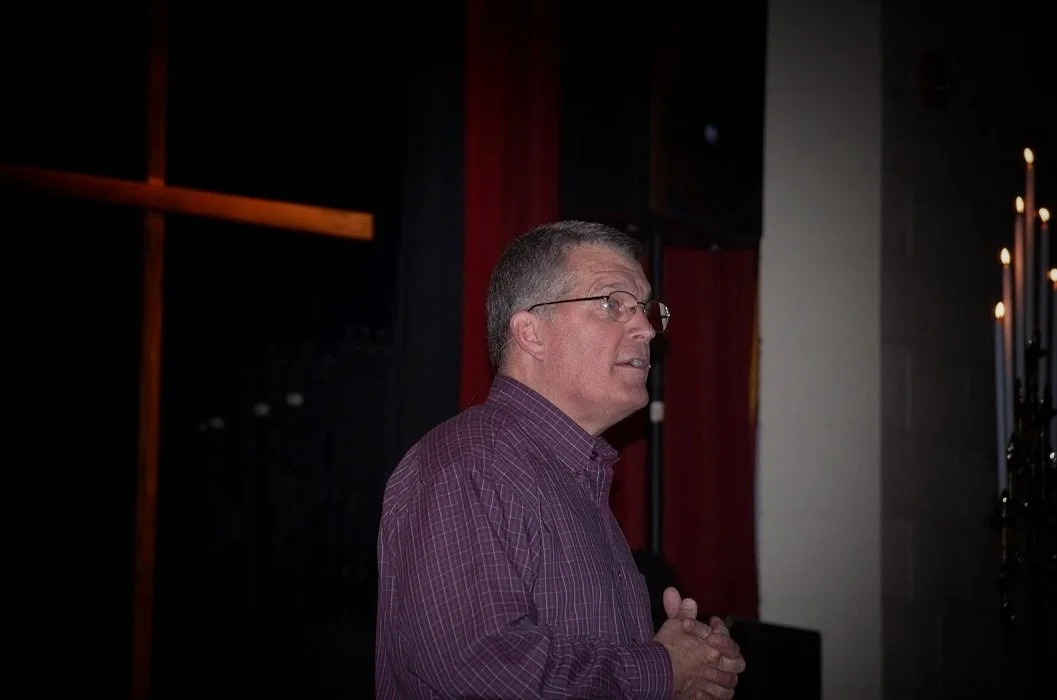
The Best Shepherd - Psalm 23 - June 28, 2026 - David Doster
/David Doster opens this sermon on Psalm 23:1-6 by celebrating the church's VBS week and reflecting on the lasting spiritual impact that faithful, lived-out faith has on children. He then anchors the sermon in a deeply personal story from 1980, when as a young staff member with Athletes in Action at LSU, he was suddenly confronted with the reality of death as a teammate of the basketball team was diagnosed with two forms of cancer. With no experience and no prepared words, the Lord brought Psalm 23 to his mind. Standing before a room full of weeping players on the eve of a game, David shared those ancient words — and God used them to open a door of ministry to the entire team. That moment set the tone for the entire message: Psalm 23 is not merely a comforting poem, but a living declaration of who Jesus is as our shepherd.
David carefully situates Psalm 23 within its canonical context, noting that it cannot be fully understood apart from Psalm 22, the great Messianic Psalm of forsakenness and suffering. It is precisely because Jesus cried out, "My God, my God, why have you forsaken me?" (Psalm 22:1) that He is qualified to be the shepherd who leads us beside still waters and restores our souls. Working through the text verse by verse, David highlights the shepherd's role as gracious provider, gentle guide, and courageous protector — drawing on the imagery of sheep who can only eat and rest when they are at peace, challenging the congregation to ask honestly where and how they carve out stillness in a noise-saturated culture.
The sermon reaches its most personal and powerful moment when David reflects on his late wife Julie, who, on her birthday and in the midst of excruciating pain from cancer, sent a message to family and friends declaring, "I know the Lord holds me and I can trust him with each day." This was no abstract theology — it was the lived-out reality of Psalm 23. David closes by calling the congregation to honest self-examination: Is Jesus truly your good shepherd, not just in word but in the depths of your heart? Are you walking through a valley right now? And is your longing for eternity in His presence deepening? Because the one who is our shepherd is the same one who walked through death before us, and He has every credential to lead us all the way home.
Transcript
You know, when I think of this past week and everything leading up to makes me think of our newcomers luncheon that we have periodically during the course of the year. Because during that interaction where the elders are meeting and interacting with folks that are exploring the possibility of being a part of our church body, one of the things that we try to encourage and emphasize is not just kind of a casual sort of a laissez faire type level of engagement, but actually truly a connection which obviously begins through faith in the Lord Jesus. But then beyond that is meaningful connection. And part of that is we pray that God would use the gifts and talents that he has bestowed that he has endowed folks with.
That can be natural, physical, mental, whatever, but it also is spiritual. So in some ways when we think about the vbs and what we've been privileged to experience and to pour into in these children over the last, what, three years now, with Jay's excellent leadership and Peg doing a million things and then every volunteer, it truly has been a wonderful expression of the body being the body. And I think that's something that we celebrate and encourage and reinforce as we have opportunity. It can be a one on one encounter, but then it can be as God mobilizes his, his body, the church to seek and to serve. And surely that's what we have been privileged to experience.
And so again, grateful again for Jay's leadership, all for Peg did and every one of you and even all those that were praying, you weren't physically here, but you were praying and praying as we had said. And I think even Rick mentioned this over the hearts of the children. Now one thing I just want to reinforce as well, it was a great week. But the realities of those truths are not confined to 222 Believers Way, but our prayer, our desire is to see those manifested in an ongoing way. And even this month, interestingly, research came out that basically reinforced the fact that the most single most meaningful, impactful spiritual aspect of a child's life is to see faith being lived out by parents and grandparents and by the church family.
In other words, we're saying it here this morning and we're rehearsing through song and preaching and sharing truth. Now these, these little, little, little people, they're so impressionable and their hearts can be shaped in all kinds of ways. But as they see their not perfectly, we all have frailties. But as they see the bent of our lives living out what we profess so that we're not, as we were singing a moment ago. What? Hypocrites. Although at some time, we're all hypocrites. Right? Okay, you want to sing it again?
So critical. And even when children will stray and chase other things, there's still things that are embedded because of what they saw and heard, heard in the midst of the frailty of their own lives and around them. So let's remember, even as Steve was sharing about his dad, that if they see a steadfastness of heart, that's a tremendous means of God's grace to move toward and take hold and weave that truth down into their. Into their hearts and lives. And so, as we prepare to step into a familiar text, let's not approach it just in a familiar fashion, but let's pray.
So even now, Lord, you are here with us. Your spirit indwells your people from the moment of belief until our last breath. And you usher us home. We're mindful, even as we will see in this text, just in incredible ways, how truly, truly, truly needful we are for the good shepherd, the best shepherd, whose name is Jesus. Lord, thank you for those that you have and will put in our paths. And we pray for that even in the lives, for the lives of our children as they're growing and they're being shaped and molded in a variety of ways. We realize, Lord, that we're needful of your spirit's working. We give thanks, Lord, along with Steve, for his dad and for his faithfulness and for praying for Steve and his siblings as they gather there in New Hampshire, Lord, that you would pour out their spirit upon them and that there would be sweet, powerful, precious remembrance as they think of their dad and as they share those moments together and all those discussions when they reflect back, Lord, draw near. We pray to our brother and to his family. Pray, Lord, for Ben and Saran as they receive this woman into their home today and over these next several weeks, that they would see the reality of Christ reflected through Ben and Saran, that you would give them forbearance and a heart of service and just for your covering, your care, your protection, your blessing, even all of that in the days ahead.
Thank you, Lord, that you are with Caleb and Hannah and Titus this journey with. With aim and for the week that they had, and perhaps at times they were drinking from a fire hose. But nonetheless, help them to rightly distill the things that they need to know and understand concerning their work. With aim. Help them, Lord. Give them your pace in that, your reassurance and undergirding in that they're not going to learn it all in one moment, but it will be over the course of time and all the while, encouragement their hearts, Lord, as they persevere in faith to seek your leading, your confirming your direction in all of this. Again, Lord, as we approach your word, we know we're needful of you even to truly instruct us. So we thank you for your presence, for what you desire to accomplish in our midst, both here and beyond. In Jesus name, amen.
So this week, a ton of effort, ton of creativity, energy, sweat, I don't know. Well, there was a little bit of blood, but maybe there were. Maybe there were tears. And again, the intent is to pour in and see, here's the thing, even as we approach the text today, is that there were seeds that were planted in these young little minds and hearts, and we don't even. Can't even begin to know what kind of fruit is going to be borne out. And then the fruit that's borne out through their fruit as well.
So a reality of that for me, in pertaining to our text this morning, occurred many minutes ago, going all the way back to 1980. I was a very, very young Christian. I didn't know much of anything. I hardly knew the difference between the Old Testament and the New Testament, and sometimes I confused it with the used Testament. But nonetheless, I realize I'm so young, so I think I need to be trained. So I'll go on staff with crew and specifically athletes in action. Of course, we're praying for Kurt and Susie as well. They send me down to Cajun country, down to lsu, down in Baton Rouge, Louisiana. I had no idea what I was getting into. And as they say, sometimes I didn't know what I didn't know, which was a lot. So I arrived down there in the spring of 1980, and then I have to go out to California. I come back. So in these early months, it's an exciting time, but I'm completely overwhelmed with what's before me. Nonetheless, the Lord meets us even when we're overwhelmed. And so this particular season, LSU had everything for the makings of a championship basketball program. Their coach, Dale Brown, had scurred across the country, had brought in incredible talent from New York City to backwoods Louisiana. Nonetheless, had this incredible team practice started and things are moving along, and they've headed up to Alaska for a preseason tournament. And on the Sunday that they came back, I was over in the athletic dorm, walking down the hall, and I looked up and there came one of their players. By the name of Mark, Mark Alcorn. I had began to share Christ some months before, and because of some health challenges, he was not able to go on this particular trip. And so as he approached, I could tell that he had lost weight. So talked with him, found out that later that week he was going to lady of Our Lake Hospital there in Baton Rouge. So on that Friday, I talked to his roommate, who was also on the team. Saturday morning, we go to the hospital. We walk into his room, and there is mom and dad, who'd flown in from St. Louis. And in a matter of moments, they shared with us that Mark had two forms of cancer and they were going to be taking him back to St. Louis. We listened, and then I invited his parents to come out to the hall, and I began to share my interactions with Mark, sharing the gospel and talking about faith in Christ. His roommate asked if we could get the team together later that evening before they were about to play Tulane University. So when I knew that, all of a sudden, for the first time in my life, and there are things that Mark your life. You go back there, I'm there now. I know I'm standing here, but I'm there at Broussard Hall. And they had their pregame meal. And then we gathered these. Here are these big old guys, six, six and a half feet, seven feet tall. And we're in this room on the cusp of what would be. They would make it to the final four. But in those moments that mattered not at all. All day long, I'm Lord, I've never been confronted with the reality of death. Never. And so what, Lord? What do I have to offer them?
And the Lord, in his kindness, in his provision, brought to mind these words.
"The Lord is my shepherd. I shall not want. He makes me lie down in green pastures. He leads me beside still waters. He restores my soul. He leads me in paths of righteousness for his name's sake. Even though I walk through the valley of the shadow of death, I will fear no evil, for you are with me. Your rod and your staff, they comfort me. You prepare a table before me in the presence of my enemies. You anoint my head with oil. My cup overflows. Surely goodness and mercy shall follow me all the days of my life. And I shall dwell in the house of the Lord forever."
(Psalm 23:1-6)
And so with these guys there, tears streaming down their face, I share that passage. And then I prayed for them. And I walked just out the back door. And there was Coach Brown, a tough, tough guy. But in that moment, as he saw the reality of death before him concerning one of his players, he said to me, I guess at the end of the day, basketball is not that important. And the Lord used that to open up opportunity and access to minister to the basketball team. This is a passage for believers. It is the most popular of all the Psalms. And interestingly, it's not only popular for believers, but it's popular for unbelievers. But I have to make a very strategic distinction here, and that is these verses can truly only be real for those who have trusted in Jesus Christ. It sounds good, and there's intimacy and tenderness that in some ways tickles the ear of the unbeliever. But unless you've come to know Jesus Christ, the realities of what's offered in the text here is really of inconsequential because it's such a familiar and popular text. A couple of dangers to consider. One is familiarity breeds contempt. In other words, we've heard it even so much. But could we almost become casual or dismissive? Or do we remain tender to its truth? And then the second, why do we need some agrarian leader in an age of technology? Oh boy. Even to ask that question is to, in a sense, underscore the reality of its value in our need for it as well. So you can look, you may have the text there before you, or maybe you have it on your device. But again, our text is Psalm 23, and in these first four verses we're going to consider how our great shepherd, the great shepherd that we have here as well. Now, one of the things is to appreciate the fuller context. We're. We're working and honing in on Psalm 23. But for Psalm 23 to have its full impact, we actually have to look back at Psalm 22, because in the sovereignty of God, when we think of the flow that the Lord is my shepherd, well, how in the world can he truly be our shepherd? And so I want you to just for a moment here, as we think sometimes maybe you hear the expression canonical context. It just means that you have a verse, but as we've said times before, that you have the immediate context, but you also have the whole of the canon, which means the whole of the Scriptures. And when we stop, and if you were to survey, you would be amazed how many times you actually see the word, the term shepherd. In fact, you'd be amazed when we think of that, how many times you even see the name Abraham in the New Testament, who was what, one of the early shepherds, along with David and others. So appreciating the fuller context that Jesus is our shepherd. My shepherd. Your shepherd. Notice what it says first in Psalm 22, verses 1 through 2.
"My God, my God, why have you forsaken me? Why are you so far from saving me from the words of my groaning? Oh, my God, I cry by day, but you do not answer. And by night, but I find no rest."
(Psalm 22:1-2)
And then, as we saw a moment ago, the Lord is my shepherd I shall not want. He makes me lay down in green pastures. He leads me beside still waters. He restores my soul. For those realities to be true and for him to be that shepherd means that he in fact, was the one that went ahead of us. In fact, that these are both considered what Messianic Psalms. They're they apply in the immediate, but in both cases they're pointing us forward to the person of Christ, who alone is able to be your shepherd. My shepherd because of the reality of what he went through on our behalf. He's not just the good shepherd, he's the better, the best shepherd. So here, as we think of him as the great shepherd, David boldly asserts his what his confidence in Yahweh by declaring the your the Lord, which is in the Hebrew, Yahweh is his personal shepherd. In one sense, when we look at the whole of the Old Testament in particular, we see God Yahweh as the shepherd over his people. But here, and this is what needs to be actually bubbling up even as we walk through these verses and wrestle with this truth, how is he your shepherd even today? How is he working out his presence and the realities of these truths that we see manifested here in the text? Ultimately, we remember everything that we see in the Old Testament points us forward to the good shepherd. And by the way, the it's amazing even as we think of Psalm 23, how much it even ties in with what we've been doing as we've been going through the Book of Hebrews and all the different ways. And one of the things that struck me as Don was preaching last week is just the attention to detail, even as he was talking about the furnishings and what it's in a sense, one thing that it asserts to us is just the careful, meticulous, intentional way that that God has been pursuing us with the intent to call us to Himself and for him to be our shepherd. Even here, as we think ahead, here's some passages from the New Testament that remind us that I am the good shepherd. I know my own, and my own know me. There From John, chapter 10, verse 14. Now may the God of peace. This is from Hebrews, who brought again from the dead our Lord Jesus, the great shepherd of the sheep. And how by the blood of the eternal covenant, equip you with everything good that you may do his will working in us that which is pleasing in his sight. How through Jesus Christ, to whom be glory forever and ever. And when the chief first Peter, and when the chief shepherd appears, you will receive the unfading crown of glory. So we think of this, this great shepherd that we have, not only who is there at the beginning, but but who is faithful at every turn and even faithful all the way to. To the end. The shepherd is that of God's people, but also individual members as well. And he is as a shepherd what? Our gracious provider. Again, for us to live with a sense that you and I belong to him. And then it says that I shall not want as a result of that. Simply declares that God is faithful to what? To meet the needs of his people.
"Oh, fear the Lord, you his saints, for those who fear him have no lack."
(Psalm 34:9)
And then Paul writes in Philippians 4:19,
"and my God will supply every need of yours, according to his riches in glory in Christ Jesus."
Tim Laniak, who immersed himself in his family for a period of over a year in that Palestinian area, writes these words. He says the scene of satisfied sheep is ironic in a way. This is where context helps to highlight the significance. The desert is a place of desolation and deprivation, where all is drawn toward death. But good shepherds can provide life sustaining gifts for their flocks in this kind of place. When they do, we see a picture of rejuvenating satisfaction. It was precisely this kind of region that God chose to reveal as provider and sustainer. Now stop and think about it. Where is it that God takes his initiative to meet his people? It's not in a resort, it's not in some comfortable confines. No. He meets them out in a place of scarcity, of paucity, of bareness, of desolation. We don't have time. But if we did, whether it be in your own individual journeys, there would be testimonies here or testimonies of those that we know. Who. Where did God find them? God found them in a place of absolute spiritual desolation. In fact, in one sense, we're all in that camp. Because apart from Christ, we are what? Spiritually dead? Spiritually in a place of desolation, desperately in need of a shepherd, a savior, whose name is Jesus. Even Deuteronomy chapter 2, verse 7. Notice, even in the early stages of God's connection, he says, for the Lord your God has blessed you and all the work of your hands. He knows you're going through this great wilderness. These 40 years, the Lord your God has been with you and you have lacked nothing.
We just sang that incredible song by Cece Winan. I sing it. When I sing it, I weep, because that was a song many times that Julie and I would sing at night before we went to sleep, and we would sing about the goodness of God while she was dying of cancer. In other words, the reality is, even when we don't understand, and it feels as if our world is unraveling and we cannot explain, we need to step back, go to our knees and say, lord, I don't understand. Grab hold of the Psalms of lament. Let them give you words and language and the ability to pour out your heart whatever it is you might be wrestling with. And remember that the goodness of God is never diminished, even though we don't comprehend in those moments exactly what's taking place. As we work our way into verses two and three, we see what this generous provision, this. This broad statement concerning the psalmist expresses clearly what his provision looks like. I mentioned a moment ago how the Lord revealed himself in this place of desolation, that it was a land, it was rocky, it was dry, it was patchy, it wasn't, quite honestly, like the green fields of Ireland. We give thanks for the green fields of Ireland and God just as sovereign of that as he is in what we see in those arid places in the Middle East. But the shepherd had this incredible task and they actually, though it wasn't written on a piece of paper, it was written here and here. They had PhDs when it came to caring for their sheep. Sometimes, as you study the patterns, the migration, nomadic lifestyle, they literally will travel hundreds and hundreds of miles, even up to a thousand over the course of a year. What to try to find the necessary vegetation, they had to help the sheep distinguish between what was poisonous and what was healthy. They, in addition, also had to what they had to be able to find food, water sources. We go in the kitchen and flip a switch in a faucet and the water comes out. They had to be able to look for certain things there in nature that would reflect the fact that there's access to water. And here he makes this statement. What we see here in these verses are four imperfect verbs that indicate that the shepherd's influence and authority over the flock and that they had no other Leader. And we've not set it up to this point, but it's powerful in that this is the kind of imagery that God, in His sovereignty, chooses to put into His Word to describe us and to describe our incredible neediness for a shepherd. And I know, represented here and in every other church I've had the privilege to be a part of. Incredibly intelligent, educated, bright, gifted, talented, creative people. But guess what? The common denominator in each of those churches and among God's people is simply this. We recognize that we have this incredible need. And left to our own devices, our own capabilities, we can never get there. Sooner or later, as the Spirit is working in someone's life to bring he or she, whether it's someone that's near the end of the race or someone that's just starting out like a lot of our children, there's that recognition that God grants by his grace to realize the need for a savior. And the images here are precious and powerful. So sheep, as we said, are needy. They're basically helpless. If the shepherd wandered off from the pasture with the sheep, their existence might be minutes, might be a day or two, but they'd have no way of surviving. And so here he uses that imagery of what, the green field and the gentle water. And that paints a picture, because a sheep who's easily skittish, becoming quickly anxious. The only way that they're able to truly settle and eat and enjoy and delight is if they are set in a peaceful place. It's only as they sense a peacefulness and a settleness that they will even begin to eat. And what. What's described here is the shepherd who has the skillfulness, the heart, the courage, the strength to navigate them to those safe places. But it also is a great encouragement and a challenge for us. What do those pasture fields look like within our own bodies, within our own home, within our church? Would. Would. Would. We say it's a place where there's a sense of settleness again, there's disruptions all the time in life and things that happen that are beyond our control, but a. A sense of shalom. And so in this, it kind of challenges us as our culture is what. Wanting to speed us up and to go faster and faster and faster and faster. Technology, actually, in many ways, though there are benefits to it in. In many respects, has even become like a tyrant responding to bells and whistles. I'm so proud of us. There's not been one that's gone off the entire service today. I've been wanting to fuss about it, but I. But I'm gonna hold off. So here we are. So that this is one I want to. This is one of those moments where you're working through and you're preaching in a text and I'm thinking, regardless of age or stage of life, hear my heart here. And I wrestle too. When, where and how do you turn off the noise? When, where and how do you turn off the noise? It's going to keep clamoring, keep shouting, keep sending signals. For grandparents and parents, an encouragement and a challenge is how do we model that for the next generation? It's, it's not that there can't be hubbub and activity and all of that, but also how do we help them to be still and quiet and begin to think about, begin to ruminate, so to speak, on the fact that there's a shepherd who wants to know you. What. What does that look like in your homes? Just asking, as they say, how's that going? And, and maybe that's something worth visiting or, or talking about with others, but in that notice where he goes next. So as the sheep settle, as they eat healthy portions of that roughage, as they drink with delight in those quiet streams, then what does it say? It says, he restores my soul. In other words, the shepherd. Only the shepherd can reach down through all the noise, all the layers, all the things that are stirring and by spirit and with this word, what? The goodness of God, the presence of God, delight in God, rest in God. Nobody has to raise their hands. But who needs to hear that this morning? Because when I leave here today, there are going to be any number of things just like you folks that are going to come pounding. What if. Okay, not saying shirky responsibilities, but this is a Sabbath. Carve out some time to feed and feast and give him every opportunity to renew that. One of my favorite passages is out of Ruth, chapter four, verse 15. And we know the story, the whole story of Ruth and Naomi and all that they suffered, all that they went through. And here we are, as they're describing, the kinsman Redeemer, which again is a foretaste of the reality of Christ. And it says here,
"He shall be to you a restorer of life and a nurturer and a nourisher of your old age for your daughter in law, who loves you, who is more to you than seven sons, has given birth to him."
(Ruth 4:15)
What an incredible statement of promise. After all that she went through, even wanted to change her name to Mara, which means better. And, and again, here's one of those moments to Pause. Dare say some of us in here may be wrestling with bits and pieces of bitterness that want to creep down inside. And that stuff comes down and the Lord wants your whole heart. But bitter pieces creep down into that. Here they're experiencing the fact that even in this latter season of life, the Lord, not only through Boaz, but what through the succeeding sons to David and the Davidic kingdom, all the way to Jesus, will be what our restorer. How have you in recent days or weeks experienced his restorative? You may have been sad recently, you may have been sinful, battling sin. Maybe he just felt weak. One of the things that again is so powerful is it's hard for us to know because we live far, far removed from this agrarian context. But as Ladiac writes, this one particular individual describes just the incredible need of sheep. He writes, my mother, a hill farmer of consummate skill, is still amazed at the variety of ways that a sheep can find to die. Even the hardy Welsh mountain breed with which I was brought up with are susceptible to braxy pulpy kidney. I don't know what half of these mean. Staggers, pneumonia, pasturella, twin lamb disease, cancer, hypothermia in the winter, maggots in the summer, scabs, scrapple foxes, crows and dogs. They push their heads through fences and get stuck. They climb trees to pick up at foliage and get hung up by their horns or their legs. They fall down banks, get bitten by snakes and stung by wasps. They tumble into ponds and streams. They gorge themselves on fallen ash leaves, roll on their backs and blow up like balloons. They poison themselves on ragwort. Rams horns regularly grow into their own heads. They starve, freeze, get depressed, fall ill. But a good shepherd can counter every affliction. Now I'm going to read back through those. And when, when, when one lands with you like the rag ward, I want you to raise your hand. Can you imagine and yet the good shepherd, what he knows how to care for them in that regard. When we transition over to verse four, this just this whole heading of what's secure in his shadows and by the way, part of his direction, not only in what, the green fields and also the the quiet waters and and also the restorative. Notice it says there that he what leads us in paths of righteousness. Let's not forget the fact that the reality of following Christ, our good shepherd, also has moral, spiritual, truth and components to it. In other words, as he's leading us and we're growing, even at times wrestling and struggling, he's working out his presence, his character, his integrity in our hearts and in our lives. But as we come to verse four, it takes a turn. It takes a turn. And notice it says here,
"even though I walk through the valley of the shadow of death, I will fear no evil, for you are with me. Your rod and your staff, they comfort me."
(Psalm 23:4)
Dare say that verse has ministered to many, but actually what it does is it combines two Hebrew words. You could almost say it's the shadowest of all shadows. In other words, that valley, that deep dark place, sometimes of even deadly darkness, a pitch if you've ever walked into a room or been in a setting where there's no light and you lose your bearings, your sense of awareness in that regard. Can I say to you today, so that you'll remember it tomorrow, and the next, and the next, it's his words. Even if you're in that valley, that dark place, he will sustain you. Derek Kidner, the well known Old Testament scholar, says only the Lord can lead a man or woman through death. All other gods turn back and the traveler must go alone. You can have all the even the body of Christ around you, but there are aspects of this journey. It is you and Jesus, you and Jesus, you and Jesus. The scholar John Collins describes the the valley, or the Hebrew term is wadi or body. He says, I remember hiking in the Body Celt from Jerusalem to Jericho. It's about a 15 mile hike with a friend. A narrow ancient Roman aqueduct, still flowing with water, clung to the canyon wall at a height of several hundred feet. We began our journey following the rugged footpath on the opposite canyon wall, dipping at points to the bottom of the body and back up to the other side. It took only about two, two such trips down into the shadowy depths of the stifling heat at the bottom of the wadi. And this was early morning and scrambling back up to the steep limestone wall to regain the path before we overcame our natural reluctance of heights and continued our journey walking along the outer rim of the aqueduct, or in the most narrow portions in the aqueduct itself. Even so, my 2 liter bottle of water was depleted halfway through our journey. When we stopped at St. George's Monastery to replenish our supply, the water tap in the courtyard first emitted only steam and then a grudging stream of almost boiling water. I had enough trouble dragging myself up and down those rocky hills. I cannot imagine the difficulty of herding a whole flock of sheep through the valley of the shadow of death. But David knew it and the spirit of God inspired him to write these remarkable words. I Love the story that Mort Utley tells that when he was a young boy and he was downtown with his dad, and they came to the end of this street and took a left, and as he looked down, all he could see was a dark pathway. And this little boy of eight years old, he said, and my dad reached down and he took hold of my hand. And when he took hold of my hand, my fears faded away. We have a good shepherd, the best shepherd, who, whether we ascend to the mountaintop or even if you're here this morning, and you would say before God, even in the privacy of your own closet, lord, I feel like I'm way down in the valley. You are not alone. You are not alone. And then we come into these final verses, verses 5 and 6 that offer incredible hope, even victorious thinking in heart and perspective.
"You prepare a table before me in the presence of my enemies, you anoint my head with oil, and my cup overflows."
(Psalm 23:5)
Here in this place is not one of ultimate. Ultimately being defeated. Rather, what he's reminding us is that this good shepherd is the best, the most gracious of all hosts. And he brings what could be described as this blessed hospitality over the years, here and in other settings, even as some of us have traveled overseas, like when you guys were down in Cuba, the body of Christ in these settings will give you the best. When we were in Romania, it may cost them, but they will serve you the best that they have. To be hospitable is to be generous. It speaks of a friendliness, but even more, it says to guests, to visitors, even to strangers, welcome, welcome. So hospitality may have a wonderful meal, but the meal is only enhanced and taken to a whole other level of delight when what? When there's a warmth of spirit and Christ is in that setting. And for believers, they recognize the reality of Christ in that hospitality. For the unbeliever, there's opportunity for them maybe to begin to taste of the fact. And you'll recall back in our previous study of What Romans, chapter 15, verse 7. What should Marcus, Romans 15:7.
"Therefore, welcome one another as Christ has welcomed you for the glory of God."
(Romans 15:7)
In other words, the welcome that we give to one another comes because we've already been welcomed through faith in Christ. So in one sense, as God's people, as a church, as a body of believers, there should be this incredible exuding of hospitality that just is woven down into us here. He's talking about a banquet table, a place of refreshment. He's talking about a place also, too, where it says Anointing with oil, and with that, as you would be a part of a banquet, a feast, these. These aromas, these fragrances would be applied to your head. It was another expression of word, of. Of welcome and of delighting near together. And notice it says there's an overflowing aspect of this as well as the recipient. As we experience God's best. And all the while, even in those moments, we realize that we're looking forward to a permanent place. And that's where we come in verse six, as we think of the journey ahead and ultimately where it takes us.
"Surely goodness and mercy shall follow me all the days of my life, and I shall dwell in the house of the Lord forever."
(Psalm 23:6)
Here the psalmist, even in the midst of the challenges that have been real in his life, provides this incredible encouragement that points to a confidence even in the face of enemies and adversaries. It speaks of the Lord's covenant commitment. And there's that word. We love it. He almost said it. H, E, S E, D. But we're going to say it because the H or the Hebrew word. So when we say it, it's the word. You ready? On three. One, two, three, chesed. We can do better than that. One, two, three, chesed. That is what the steadfast, loyal faithfulness, unfailing, unmitigated, continuous kindness and goodness and mercy of God. It's what Asaph had to wrestle with when we read about it in Psalm 73. Here is a man who was one of the first worship leaders in the tabernacle. As the throngs would gather and pour in, and they were lifting up praise and worship, Asaph was one of those leading. We don't know the full context of what happened, but when you read Psalm 73, it opens up with the goodness of God and closes. But from verse 22 or verse 2 up through verse 27, he's consumed with a spirit of bitterness. And it threatens him. So much so that he says, at one point, I became like a behemoth. In other words, almost essentially lost my mind. I became like an animal again. Have you ever been so consumed with bitterness that you just, in a sense, almost unravel? And then he says he went into the sanctuary of God and then put up that last verse there. Peg, verse 28. I'll read it. Whom have I in heaven but you? Actually, I'm cheating. Verse 25. And there is nothing on earth that I desire besides you. My flesh and my heart may fail, but God is the strength of my heart and my portion forever. For behold, those who are far from you shall perish. You put an end to everyone who is unfaithful to you. And then verse 28. But for me, it is good to be near God. I have made the Lord my portion, my refuge, that I may tell of your works. The Lord, in his kindness and goodness and faithfulness in this fallen world, if we live life long enough, will take us through valleys, will take us through dark places. Please remember what we see here in the text, take it to heart. Because when those days come, you're going to need to remember that you have a good shepherd, the best shepherd. And as it says there in that last Roman numeral, he is always with us. Today's June 28th. Last week ago, Sunday, June 21st, seven years ago, after a period of excruciating pain. I remember the day, it was a Friday, I guess the Thursday night before. And I called Carrie and I. I just said, she's. She's just in so much pain. And he said, Call 91911. And we did. And they came, they picked us up. And they couldn't have been kinder. And I'll never forget being at the ER and just rejoicing that they put. Gave her an IV that took away her pain. Oh, man, that was such a blessing. The next day was her birthday. She would have been 66 last. Last Sunday. And during the course of that day, she sent out a message. Her pain was under control. And she sent out this message to family and friends. She said, I never thought I'd spend my birthday in a hospital due to a compression fracture. But after many days of excruciating pain, we both realized we needed help. I'm in ICU. Through the CAT scan, they found a lesion on my L4 they believe is cancer. David, Ben and Sam have shed many tears already, but Bethany and I have not cried a lot. Just taking it all in. This afternoon, a friend of my friend was sharing about my situation. She happens to live close to me. Well, around three, she walks in my room with roses, a cake, and a beautiful bird feeder. Bethy and I just cried and cried. Her visit was a gift from the Lord. So many wonderful things happen. Today I ate solid food for the first time in three weeks. I was able to swallow pills again after throwing them up for the last three weeks. And all your sweet messages. Thank you. Tomorrow morning, I have an important mri. I'm a bit anxious, but I know the Lord holds me and I can trust him with each day. It was a wonderful. It was a wonderful Birthday.
So how is Jesus, your good shepherd? Not out here, but in here. We're almost done, but I want to pause and ask you to take a little inventory. So you bring those up, Peg. Okay. Are you persuaded that Jesus is your good shepherd? When, where and how do you turn off the noise to be quiet with him so he can refresh you? What would you say? Take an honest assessment. What is impeding you from going to that quiet place? I know sometimes we just like to have noise so we don't have to think about the hard things. The problem is the noise will not restore the heart. Are you walking through a valley that threatens to consume you? Whether it be in our lives, or there are folks that we know right now that are walking in very dark places? Do you need, as you call out to the Lord, ask, is a man a brother in Christ, or do you need to ask, as a person, woman, a sister in Christ, to go to battle with you in prayer? Thank you, Lord, for those who came and prayed with my wife. Do you find your longing for eternity in the presence of Jesus deepening? One of the realities of this text is it renews, refocuses us to give us what, an eternal perspective as we've said it before. While many think they're in the land of the living headed to the land of the dying, we're in the land of the dying headed to the land of the living. And it's not a. It's not a morbid thing. It's a reality. If one thing that my friend has taught me is learning to deal with, to accept things that I cannot control. So where's your heart this morning as you think about that? Remember this, the context of he, of Psalm 23 is what? Right before. Before Jesus becomes your good shepherd and mine. He's also the one that walks through the valley of the shadow of death before any of us sacrificed himself, shed his blood, went to a cross, was buried and raised on the third day. So he has all the credentials and more to be your good shepherd, to lead you and me and all of us to be in his presence forever.
Father, thank you that in your eternal wisdom that you have given us this remarkable book, the Bible, and each book of the Bible provides us with a rich treasury of truth. And then, Lord, you've given us, in the very middle of your book, the Psalms, the Psalter that speak and express things from the heart of your people, to pour out to you, sometimes in the highest places of praise and worship, but also sometimes in the lowest, darkest places as well. And we give thanks. As our good friend Corey Ten Boom says, there's no. No pit deeper than God can go. So, Lord, thank you for reaching down into our hearts and calling us to yourself. Thank you, Lord, that you walk with us day by day. Whatever we may face in this life, whether it be in 30 minutes or it be down the road, thank you for being not only our good shepherd, but being the best shepherd and loving us perfectly. In Christ's name we pray. Amen.